
With around six months to go until the start of the 2026 US-Canada-Mexico World Cup, a recent police investigation in Mexico – which will host some of the matches – has brought bad news.
Akron Stadium is located in Zapopan, near Guadalajara in Mexico’s Jalisco state. It will host four World Cup group games and one intercontinental play-off. However, Jalisco is home to one of Mexico’s most powerful drug cartels. The dominant Jalisco New Generation Cartel (CJNG) has been designated a terrorist organization by the US government. Known as Mexico’s "most aggressive drug cartel," it is estimated to have 19,000 members and operates in 21 of Mexico’s 32 states. The cartel is notorious for launching bold attacks on authorities, such as shooting down a Mexican military helicopter with rockets and attempting to ambush Mexico City’s police chief in 2020.
Local search and rescue teams for missing persons have accused the authorities of lacking transparency in handling missing persons cases. In May this year, a former official who once served as mayor of Uruapan in Jalisco was arrested after an investigation found he had collaborated with the CJNG. He allegedly provided patrol vehicles, guns, and police personnel to the criminal organization in exchange for approximately $3,500 in cash per month. Additionally, he helped the cartel dispose of human remains.
According to local media reports, this incident is just one of many cases involving public officials in Jalisco.
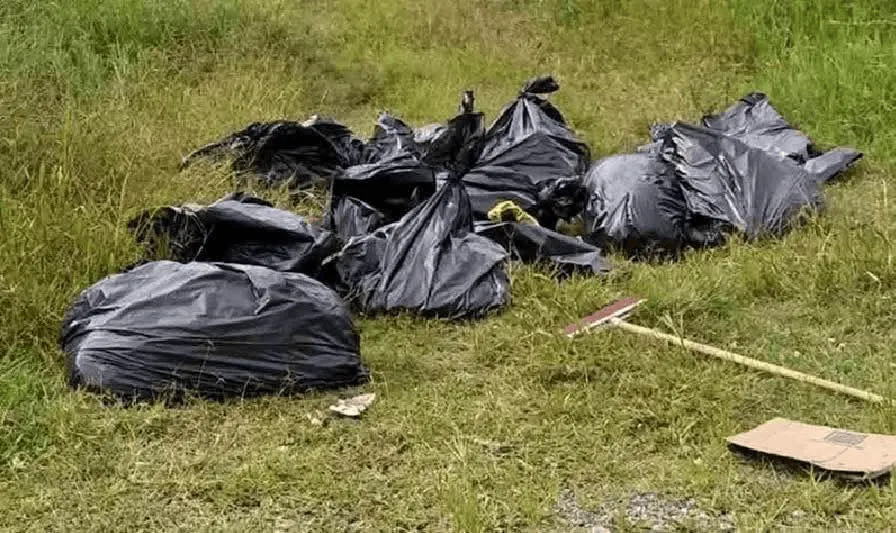
Local volunteer search and rescue teams in Jalisco stated that since 2022, at least 456 bags containing human remains have been found near Akron Stadium. Particularly since September this year, more human remains have been discovered.
Garcia, a member of a local volunteer search and rescue team in Jalisco whose own son is among the missing in the region, described it as "very unfortunate" that the World Cup will be held in such a crime-ridden area.
In an interview with the media, he said:"They (the cartels) don’t want all the dumping grounds exposed. We have to dig ourselves and pull out the body bags for prosecutors and forensic teams to collect, but this is not a priority for them at all. We know the cartels have threatened forensic teams because they decide which remains to hand over and which not to. The government only cares about money, not citizens. They even tear down the missing persons posters we put up to prevent visiting tourists from seeing the severity of the problem."
Garcia revealed that the search groups recently met with Jalisco Governor Pablo, but he believes the authorities are trying to hastily conclude the on-site work.
In Mexico, especially in Jalisco, the discovery of secretly buried bodies of missing persons remains a serious social issue. According to the 2025 National Missing Persons Report released by Mexico’s Institute of Human Rights and Democracy, Jalisco has the highest number of missing persons in Mexico. According to Mexico’s National Search Commission, 7,376 people went missing in Jalisco between 2009 and 2018. Another 9,593 missing cases were reported in the state between 2018 and 2021. This year, as of October, approximately 1,000 missing cases have been reported in the state, a 30% increase compared to the same period last year.
Currently, Jalisco has specially strengthened security measures for the World Cup, including adding 3,000 surveillance cameras, armored vehicles, metal detectors, and deploying the National Guard.
Security analyst David Sosaedo predicts that a tacit agreement will be reached between the cartels and the government: as long as the cartels avoid any high-profile actions, security forces will suspend operations to arrest cartel leaders. However, he warned that such a truce does not mean the cartels will stop their criminal activities. Organized crime groups will use the World Cup to "step up criminal activities," including casinos, street drug dealing, and ticket scalping.
Jalisco officials stated that the World Cup is expected to bring $1 billion in revenue to the state and create up to 7,000 jobs, mainly in tourism and construction, as the region is rushing to add 12,000 new hotel rooms before the tournament.
For those searching for missing loved ones in Jalisco with little help from the authorities, hosting the World Cup here feels like whitewashing the state’s violent crime problem. Garcia believes that the state government and Mexico’s federal government are trying to cover up the serious missing persons issue in the region. The government is more concerned about the local image and economic development, and has even asked local search and rescue teams to withdraw missing persons flyers to prevent tourists near the stadium from noticing the severity of the problem.