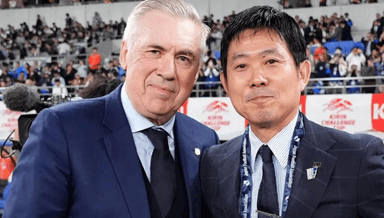

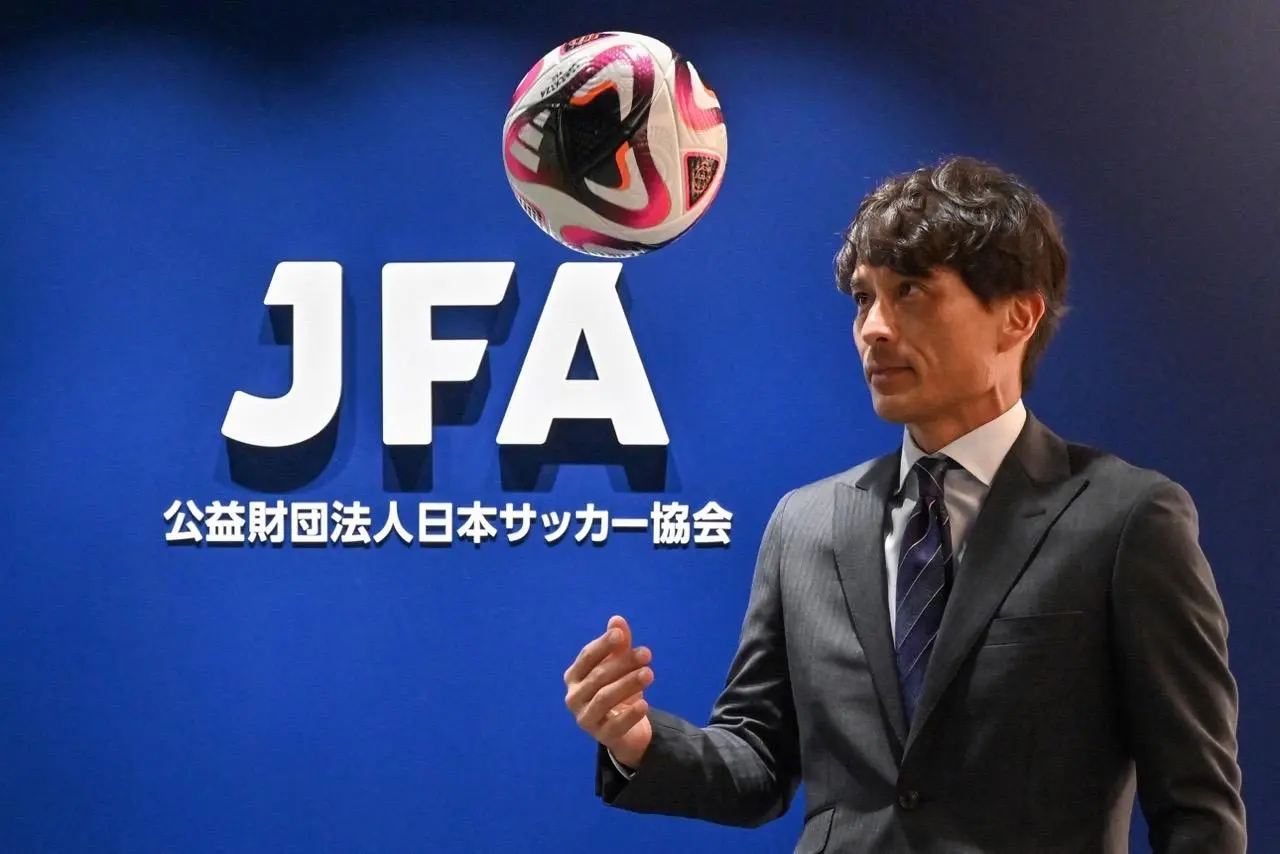
The President of the Japan Football Association (JFA) discussed Japan’s World Cup strategy in an interview with Camel Live.
Q. During the Club World Cup, FIFA President Gianni Infantino was everywhere in the United States. How do you assess his work?
He’s doing an excellent job. I never thought the World Cup would have 48 teams. Originally, 32 teams were already great, but the expansion gives more countries the opportunity to compete at the highest level, which is beneficial for the global development of our sport. Many member associations that have never participated in the World Cup now see a chance to qualify. This is of great benefit to the sport and its future development.
Q. You have previously said that Japan hopes to host the World Cup again before 2050. What conditions are needed to achieve this goal?
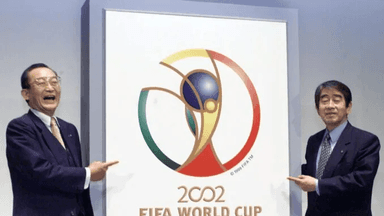
Hosting a tournament with 48 teams in one country is extremely challenging. Japan currently does not have a stadium with a capacity of 80,000, which FIFA requires for the opening match and final. Building a new stadium is not impossible, but it is very difficult. Even without an 80,000-seat stadium, we need six stadiums that can hold 40,000 people each. Currently, we plan to bid for the 2046 World Cup, but we may co-host it with another country that has good facilities and political influence.
Q. What are the advantages and disadvantages of co-hosting with another country compared to submitting a solo bid?
Co-hosting has many advantages, including resource sharing, infrastructure sharing, and joint financial responsibility, and it can also be a powerful symbol of regional unity. However, coordinating multiple governments and associations can be challenging, especially in terms of logistics, regulations, and operational consistency. Nevertheless, co-hosting has become a trend for major global events, and we believe the participating countries can reach a high level of consensus. On the other hand, a solo bid has clearer division of responsibilities and more centralized management, but it also requires the country to invest more funds and energy.
Q. Have you considered any potential countries as co-host partners?
I do have some ideas, but I can’t say now.
Q. We will soon know the challenges Japan will face at next summer’s World Cup. What is your target?
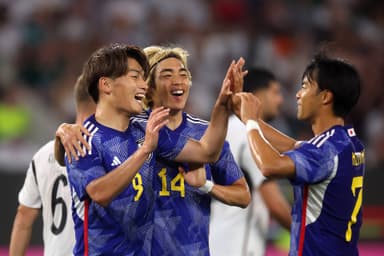
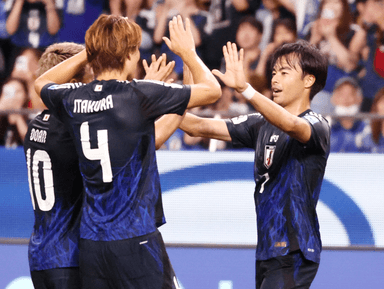
The players’ goal is clear: to win the tournament. Of course, this sounds very distant, but our players now play in Europe, competing with top players and clubs, so they know exactly the level needed to challenge for the title. Last month, we played against Brazil and actually won – something I couldn’t have imagined during my peak playing career. We were 2-0 down but came back to win 3-2; it was amazing. I think that victory greatly boosted the team’s confidence, and I hope this confidence will help them in the upcoming games. For this year’s US-Canada-Mexico World Cup, our target is to reach the quarterfinals (top 8). Japan has never advanced to the quarterfinals before, so this is our pragmatic goal.
Q. The Japan men’s team strives to win the World Cup by 2050, but faces a long-term problem: Japan’s declining birth rate, which means fewer young athletes. How is the JFA addressing this?
We encourage children to participate in multiple sports, not just football. For example, they might play football on Monday, baseball on Tuesday, and other sports midweek. This is a good way to keep children active and engaged. Otherwise, too many children would spend all their time in after-school tutoring classes.